
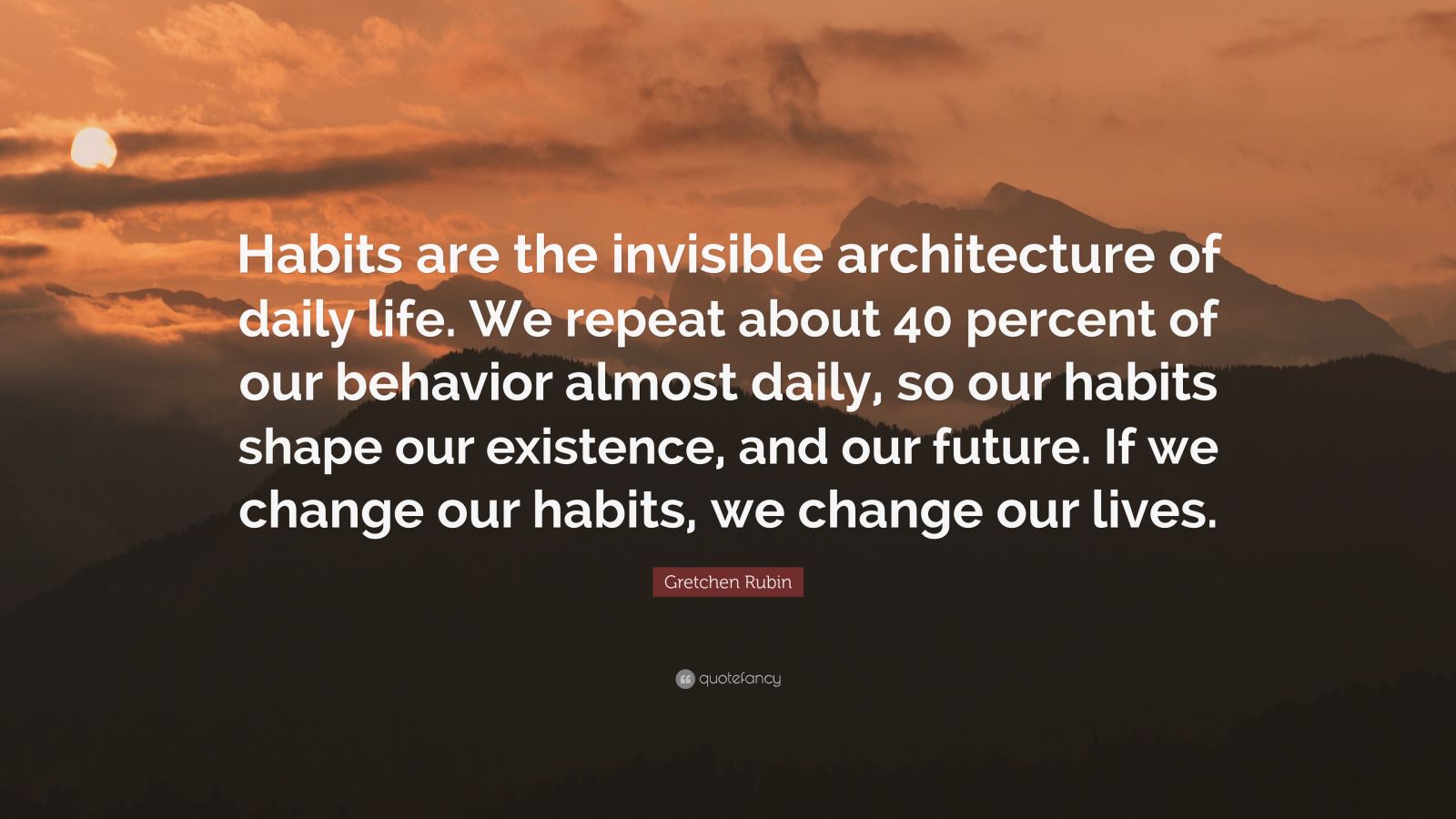
Habits: The Invisible Architecture of Your Life
Introduction
Ever stopped to wonder why you automatically reach for your phone first thing in the morning, or why you crave that sugary snack after lunch, even when you’re not hungry? These aren’t random acts of rebellion; they’re the subtle, often unnoticed, blueprints shaping your reality. These are your habits, the invisible architecture of your life.
We often think of big, sweeping decisions as the architects of our destinies – choosing a career, getting married, buying a house. And while those choices certainly play a role, it’s the accumulation of countless, seemingly insignificant habits that truly determines where we end up. These habits, good or bad, act as the tiny bricks and mortar, building the foundation upon which our lives are constructed.
Think of it like this: your life is a magnificent building. Are you carefully laying solid, well-chosen bricks, creating a structure that’s strong, resilient, and beautiful? Or are you haphazardly throwing together mismatched pieces, creating a foundation that’s shaky, prone to collapse, and ultimately unsatisfying?
The scary part? Most of us are sleepwalking through the construction process, unaware of the habits that are shaping our days, and ultimately, our lives.
The Short-Term Seduction, Long-Term Consequences
The allure of a bad habit lies in its instant gratification. Scrolling through social media gives you a quick dopamine hit, a temporary escape from boredom or stress. Ordering takeout is faster and easier than cooking a healthy meal. Skipping the gym means an extra hour of sleep (or Netflix).
In the short term, these choices feel harmless, even beneficial. They offer a moment of comfort, a fleeting sense of pleasure. But the problem is that these seemingly insignificant moments accumulate, creating a ripple effect that impacts everything from our physical health and mental well-being to our relationships and career prospects.
Imagine consistently choosing takeout over home-cooked meals. Short-term, it’s convenient. Long-term, it could lead to weight gain, decreased energy levels, and increased risk of chronic diseases. Similarly, constantly checking your phone prevents you from focusing on important tasks, damaging productivity and potentially leading to increased stress and anxiety.
On the flip side, think about the power of positive habits. A daily walk, a few minutes of meditation, or even just making your bed in the morning can have a profound impact on your overall well-being. These small acts of discipline build momentum, creating a virtuous cycle of positivity and success.
Rewriting the Blueprint: Practical Solutions for Building Better Habits
The good news is that habits, even deeply ingrained ones, can be changed. It takes conscious effort, patience, and a strategic approach. Here are some practical solutions to help you rewrite the blueprint of your life:
- Understand the Habit Loop:
Charles Duhigg, in his book “The Power of Habit,” outlines the habit loop: Cue, Routine, Reward. Identifying these components is crucial for breaking bad habits and building new ones.
- Cue: What triggers the habit? Is it boredom, stress, a specific time of day, or a certain place?
- Routine: What is the behavior itself? Scrolling through social media, eating a sugary snack, skipping the gym?
- Reward: What benefit do you derive from the habit? Stress relief, entertainment, a sense of accomplishment?
Example: You feel bored at work (Cue). You open social media (Routine). You get a quick dopamine hit from seeing new posts (Reward).
- Replace, Don’t Eliminate:
Trying to eliminate a bad habit cold turkey is often a recipe for failure. Instead, focus on replacing the negative routine with a positive one that provides a similar reward.
Example: Instead of scrolling through social media when you feel bored, try taking a short walk, listening to music, or chatting with a colleague.
- Make It Easy, Make It Obvious:
For building new habits, make the desired behavior as easy and obvious as possible. This reduces friction and increases the likelihood of success.
Example: If you want to exercise more, lay out your workout clothes the night before, keep your gym bag packed, and schedule your workout into your calendar like an important meeting.
- The Two-Minute Rule:
Break down your desired habit into smaller, more manageable steps. Aim to do something for just two minutes. The key is to start small and build momentum.
Example: Instead of aiming to run for 30 minutes, start by putting on your running shoes and walking around the block for two minutes. Once you’ve established that routine, you can gradually increase the duration.
- Track Your Progress:
Monitoring your progress is a powerful motivator. Use a habit tracker app, a journal, or even just a calendar to track your successes. Seeing your progress can provide a sense of accomplishment and keep you motivated to continue.
- Embrace Accountability:
Sharing your goals with a friend, family member, or coach can provide valuable support and accountability. Knowing that someone else is checking in on your progress can help you stay on track.
- The Power of Environment:
Our environment plays a significant role in shaping our habits. Create an environment that supports your desired behaviors and minimizes temptations.
Example: If you’re trying to eat healthier, stock your kitchen with healthy foods and remove processed snacks from your pantry.
Alternative Approaches:
- The “Seinfeld Strategy”: Mark off each day you stick to your habit on a calendar. The goal is to create a long chain of “X’s” and avoid breaking the chain.
- The “Temptation Bundling” Technique: Pair a task you dislike with something you enjoy. For example, listen to your favorite podcast while you’re doing chores.
- The “Implementation Intention” Approach: Clearly define when, where, and how you will perform your desired habit. For example, “I will go for a 30-minute walk at 6 PM every evening in the park near my house.”
Case Study: The Power of Small Changes
Consider Sarah, a young professional struggling with procrastination. She felt overwhelmed by her workload and often found herself scrolling through social media instead of tackling her tasks. By understanding her habit loop (feeling overwhelmed – scrolling social media – temporary relief), she replaced the negative routine with a more productive one. She started by using the “Two-Minute Rule,” committing to working on one task for just two minutes. Gradually, she increased the duration and began to feel more in control of her workload. She also implemented the “Temptation Bundling” technique, listening to her favorite music while she worked. Within a few weeks, Sarah noticed a significant improvement in her productivity and felt less overwhelmed.
Building Your Masterpiece
Habits are not destiny, but they are powerful forces that shape our lives. By understanding how habits work and implementing practical strategies, you can consciously design the invisible architecture of your life, one brick at a time.
It won’t be easy. There will be setbacks, moments of weakness, and days when you feel like giving up. But remember that every positive habit you cultivate is an investment in your future. Each small act of discipline adds strength to your foundation, building a structure that’s resilient, beautiful, and uniquely yours.
Start small, be patient with yourself, and celebrate your progress along the way. You have the power to rewrite your blueprint and build the life you truly desire. The time to start building is now.